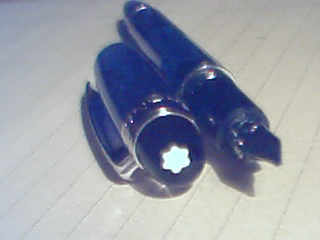
Thursday, June 29, 2006

Thank You, Friends!

Two days ago I wrote a post on my reaching the 100-post landmark. I don't hesitate to use the word 'landmark' because it is a landmark, considering that only a few months ago, I did not even have a blog, and today I have a family of sorts -- people who encourage me with their comments.

Why are comments so important? Rather, why should comments be so important? You may say: I write the blog for myself, and I don't care whether someone reads it or posts comments. Easier said than done. Posts are nothing but an expression of your feelings or an emotion, and in order to express those feelings or that emotion, you often spend a lot of your valuable time -- at times minutes, at times hours.

Now imagine spending two hours writing a post, and not even getting two comments. While that does not take away from the quality of your writing or the satisfaction you derive by getting the load off your chest, it is certainly disheartening. No self-respecting blogger will ever admit the sense of dismay, but that's the truth. On the other hand, if you attract even a handful of genuine comments, you feel your effort has been worth it. You feel good. That's why we all blog at the end of the day -- just to be acknowledged and to feel good.

And now it is my turn to acknowledge: I cannot cross the 100-post mark without mentioning people who have made me feel that my effort is worth it. The list of such people has expanded of late, thank God, but how I can ever forget the 'core group':

Anil Shankar and Ravi Juneja: they comment only when they really feel upto it, and hence their comments carry a lot of weight.

My good, old Usha, who always instils the belief in me that I can tell a story.

Visithra, a born blogger and a talented writer who never lets her pals down.

Arundhati, the minimalist who manages to stir hearts with just a couple of couplets.

Prerona, who has a feel for life and who effectively transforms those feelings into words.

Atul Sabnis, a fellow Capricorn, who I think thinks just like me.

Maya, who has complete faith in what I write: even if I write crap, she will faithfully report that it is crap.

Akruti, aka Neelima, who shares my taste in music (wish she started blogging again).

Vandy, a fellow UP-wallah (or UP-waali?) who won my heart with her post titled 'Ganeshi'.

Deepa, the girl from Madikeri and now a fellow journalist, who churns out a clean copy even when she blogs. If I were to own a newspaper, I would have made her the news editor or the features editor, even though she is only 22 or 23 (how old are you, Deepa?).

If I have left out certain names that I should have mentioned, then it has to be of people I take for granted. Please forgive me for the (unintentional) omission because I am writing this post without referring to the 'Friends' list. But offhand I recall the IDs of some new friends: Dazedandconfused, Anu Russel and this wonderful blogger from Kottayam (Beks?).

Two people deserve special mention: Shoe Fiend and Ammani. Shoe Fiend I have been reading for quite a while, and Ammani very recently. Their wordsmithery makes me feel jealous.

Wednesday, June 28, 2006

The Scribbling

She had a strange belief: whenever it rained, something good was bound to happen to her. When she was in class ten, it was raining as she was going to collect her marksheet, and she topped in her class. It was raining even the afternoon the postman arrived with the call letter for her first job. And it was again raining the day they first met: they had taken shelter in the front of a shop, but the shower was heavy and he had hesitatingly asked her if she could keep his book inside the Crossword bag she was holding.

So that night when it rained immediately after they ended up doing what they shouldn't have even thought of doing, considering that he had a faithful girlfriend and she a loving boyfriend, he heaved a sigh of relief as he rolled over. "Do you hear that? It's raining," he whispered. She clung to him like a child. "It's raining," he whispered again, straining all the muscles in his throat. She merely nodded and kept running her finger on his chest.

What's she scribbling on my chest, he wondered. Is it one of those geometrical figures you tend to scribble while you are nervous? Or was she scribbling his name or initials? Or was it her boyfriend's? Perhaps, she was practising her own signature? He tried to figure her finger movements for a while and then fell asleep. He woke up seven years later. A pretty woman had a hand and a leg over him. He removed the hand and leg carefully, so as not to wake her up, and walked across the hall to get the morning papers.

'Amitabh is (Only) a Lucky Superstar'

Ok, I think of Amitabh as a superstar, the world thinks of him as a superstar, but what does Mithun Chakraborty, a contemporary and a co-actor in Agneepath (which fetched Mithunda a National Award for best supporting actor), think about the Big B? The Bengali star smiles and says: “I would say he is a lucky superstar.” Lucky? As in the Big B is no good as an actor? “Look, what is acting? Acting means you should be able to play any role given to you. Acting means playing Ramkrishna Paramhansa (in Swami Vivekananda) and also being the Disco Dancer of the nation. If you talk about acting, I think Naseeruddin Shah is a great actor, Paresh Rawal is a great actor, even Johnny Lever is a great actor. For me, they are the real actors.” Full story here

Tuesday, June 27, 2006

On Reaching 100

I am 100-posts-old. Wont’ you wish me? But wait, right now my thoughts are with a man who also would have been wished today if he were alive. And if he were alive, he would have been rocking. Parineeta’s songs might have had a different tune and A.R. Rahman wouldn’t have been as hot as he is considered today.

But Pancham is still alive, isn’t he? His albums sell like never before, and he sells more than anyone else. He is today a brand. For a die-hard fan like me, every day is Pancham’s birthday. He is, after all, a habit: when you use Colgate every morning, you don’t ask, “When was Colgate born?” That way, nothing unusual about June 27, except that I am writing my 100th post today, having begun the journey sometime in October last year.

The man who began the journey is different from the man who is writing the 100th post. That man was single and in search of something – in search of what, even he didn’t know. He would never get what he sought, and that would make him lonely – and how he loved to stew in loneliness. The stew fuelled this blog.

The man who is writing this post is married and kind of content. His search is on, but it is no longer urgent. Still he misses those long, lonely nights when he yearned for that something – but that something would always remain in a veil on the other end of the cyberworld.

Most of the 100 posts were written out of that yearning. Alcohol contributed too. In celebration (celebration? Why not!) of the century-mark, I reproduce five posts which I consider my best. Please read them: it won’t take you long:

1. Circle of Life

2. The Day I Cried

3. Thoughts on a Cloudy Afternoon: Hot Samosas and a Goon

4. Of Mice and Men

5. By The Ganges

Monday, June 26, 2006

In Pursuit of Pleasure

I have never paid for sex, yet I have had my brush with prostitutes. If I was politically correct, I would have said 'commercial sex workers'; but I don't believe in a hollow nomenclature which only seeks to mask a supposedly vulgar word. But it is the vulgarity of the whole thing which makes men seek prostitutes in whichever town or city they are in. Vulgarity, after all, is a shade of sin, and sin can be fun, at least till you commit it.

It primarily stems from a simple logic: The more you are supposed to keep off something, the more you are tempted to check it out. My first brush with the world's oldest profession was in Varanasi, or Benaras (ancient India called it Kashi). I was 23, already on my first job, in Kanpur. My left-handed, leg-spinning abilities had earned me a place in the Kanpur journalists' cricket team and we had gone to Varanasi to play a tournament. The very first morning we lost a match against Lucknow journalists and were out of the tournament. But we had time to kill till the next afternoon. So after the match, as the rest of our team was getting ready to a cocktail party, a senior journalist from a Hindi paper and I slipped out to have a look at Varanasi. The city was significant for me, in the sense that I was named after the presiding deity of Kashi's Vishwanath temple -- Lord Shiva.

After a brief visit to the temple, where I prayed to Lord Shiva to make me a great journalist, we roamed around the narrow streets of Varanasi. And after a while, we found ourselves by the Ganges. We took a boat to the other side, only to find that parts of the ghat had been cordoned off because Rajkumar Santoshi was shooting Ghatak. Meenakshi Seshadri was supposed to be there, though I didn't see her. But I saw Sunny Deol -- a very fair, well-built man -- waist deep in water. We returned to the other end of the river and continued our stroll. "This woman," said my companion, the Hindi journalist, "has been following us. Don't turn back to look immediately, just turn around casually." I turned around under some pretext and saw a dark, short woman in a white saree behind us.

She followed us wherever we went, from this street to that street. I was excited: my first encounter with a prostitute. My companion, I could see, was excited too. But we couldn't still be certain she was a hooker: we were giving her the benefit of doubt. Then my companion said: "Let's get into this shop. If she follows us even there, then you know what she wants." We walked into a sweet shop and order samosas and lassi. The woman arrived before the samosas and took a bench next to us. We avoided eye contact but finally she asked: "Aap logon ko kuchh chahiye (are you guys looking for something)?" I felt extremely nervous and looked at my companion, but he seemed to be even more nervous: his gaze was fixed on the table. Without looking up even once, he told me: "Ask her to go." I gather courage to tell her that we were not looking for anything. She left the shop after having a glass of water. I had had my share of thrill.

In Delhi, where I moved to shortly after, the designated redlight area is a place called G.B. Road near the Red Fort, the home to the last Mughals. By the day, traders, who have shops on the ground floor of every building flanking the street, run the place. By the night, the pimps and the prostitutes, who live on the first floor of those buildings, take over.

Those were the days! In the mornings I would be a boyfriend. In the afternoons and evenings, I would be a political reporter, scuttling between office and Parliament House and Shastri Bhawan (where the ministries are housed) and the BJP office and then finally filing copy after copy over pegs of rum. On certain days, a late-night development would take place -- such as Cabinet reshuffle or secretary-level reshuffle. I would have to call up contacts, look at agency copies and file a story -- often I had only 15 minutes to write the lead story. And when there were no such developments, the nights would be reserved for chatting on the internet: the chatting had just started then and was not as vulgar and sex-hungry as it is today. Finally at 1 am, we would leave in the office car: the drivers, mostly Sardars, had become my friends.

After everybody else was dropped, the few bachelors who remained would coax the Sardardji on duty to take us to a roadside dhaba for a dinner of roti and daal-makhni. Actually we wouldn't coax him, we would command him: for he too would be eating with us, on us. And there were nights when we would decide: "Ok, let's go to G.B. Road." What fun! The Ambassador car would be parked on a road whose silence would be broken by catcalls. The number of the catcalls would depend on the previous date of the police raid. If the raid was recent, the catcalls would be hushed.

One of us -- it was never me --would go out of the car and negotiate. He would come back and say something like, "Sattar rupaye maang rahi hai, chalna hai (she is saying it would be Rs 70 each, want to come?)?" Rs 70 was peanuts, so we would agree. There would always be a boy in our group -- mostly a trainee sub-editor -- who would be too scared for such an adventure. We would ask him to stay in the car and deposit our wallets and watches with him. And thank God we had boys like that to stay behind, because prostitutes in Delhi change colours the moment you climp up to their tiny, grimy rat hole. The scene is usually like this:

The prostitutes: "I don't know who told you it will cost only Rs 70 per head. We charge Rs 200."

One of us: "But we spoke to your man."

One of the prostitutes: "How do you know he is our man? Seventy rupees is peanuts."

One of us: "That's all we have, and that's what we can pay: Rs 70 each. Take it or leave it."

The prostitutes: "You guys can't be trusted. We are sure you have money hidden somewhere." And they go on to feel your pockets, your underwear and even you socks. Yes, I have had to remove my socks in the brothel, and I thanked my stars for having left my wrist-watch behind.

After my first such examination in G.B. Road, I found three women fighting for me. Wait, this is not even remotely flattering, especially when you are in a dingy hole just wanting to get a feel of the world's oldest profession. One of them grabbed my arm and put it around her waist, then a second snatched it away and put it around her waist. All in a matter of minutes. And then a third one appeared: she pushed the other two and grabbed me. I went with her into a tiny cubile which had a cot. She shut the door and stripped below the waist and lay on the bed, but not before handing me a condom she took out from inside her bra.

"Look, I am not here to do anything, I only want to chat with you," I told her. The woman got senti. She instantly hugged me and kissed me and said: "You resemble my younger brother!" And then she went on to tell her life-story: she was from Ongole district in Andhra Pradesh and that she had got into this profession to support her family and that I should come only to her when I am here the next time. Before she could finish her story, her mates called out from outside the cubicle. "Oh, looks like your other friends have finished," she giggled. I went down the dark stairs and found myself following my colleagues. In the car we exchanged notes: none of us had had sex except our driver. The driver did whatever he had to within minutes and had walked out, prompting the inmates to hurry the rest of us.

I returned to G.B. Road once again, this time pissed drunk. My partner was a fat woman, who said she hailed from Tirupati. She sneered at me: "Heh, you are so drunk, you are not capable of doing anything!" I told her that my drinking was none of her business and that since I had paid the money, she should at least strip. Strip she did, but even before I could register her contours, her mates shouted from across the wooden walls to say that my time was up. The driver, once again, was the culprit.

When I came to Chennai in 2001, I was not only girlfriendless but also friendless. I did make a few friends, but they were no good because they themselves were in search of girlfriends and were seeking my advice on how to find one. How could I render advice when I myself was seeking not only girlfriends but also those forbidden pleasures in a new city? It so happened that I was looking for a new house, and in the classified columns of a paper, I also found the answer to my physical urges. I spotted an ad of a beauty parlour in T. Nagar which promised facials as well as a 'relaxing' body massage.

I was not new to the 'body massage' business because when I was leaving Delhi in 2001, the place was full of parlours that offered such 'massages'. They even advertised in respectable papers such as Times of India. When I called up the number mentioned in the ad for the T. Nagar beauty parlour, a female voice answered. "I want a facial. What are the rates?" I asked. The female answered: "Sir, the rates depend on the attendant you choose. Please come to our parlour and you can have an attendant of your choice."

I was in the parlour within the next 45 minutes -- it was in a popular shopping mall in T. Nagar. "Welcome, sir," a leotard-wearing woman said. Another woman, plain-looking and wearing a saree, smiled. "I want a facial," I said.

The leotard-wearing woman asked: "Normal facial or Shehnaz Hussain facial?

"What's the difference?" I asked.

The leotard-wearing woman: "Shehnaz Hussain facial is Rs 1000, normal facial is Rs 750."

"I would go for the normal facial."

"But sir, I do only Shehnaz Hussain facial. She does the normal facial," the leotard-wearing woman said, pointing to the other woman.

"In that case, give me Shehnaz Hussain facial," I said, settling into a chair in front of the mirror.

As she prepared the concoctions, she asked: "Sir, do you also want company?" Company? What on earth is that? I could vaguely guess what she meant, so just to be sure, I asked her: "And where will you give me company?" She replied, pointing to a couch, "Here."

"Thank you very much, but I want only a facial done." Not that I was not tempted, but such kind of sex is risky business. Shady massage parlours, from Kashmir to Kovalam, have female attendants who jerk you off under the pretext of doing you a favour by 'massaging' those parts of the body which is supposedly not permitted to be massaged. "I will massage this as well, but please don't tell the owner/doctor. You only have to give me some extra money," the female masseur will tell you. I had heard that in Delhi, I had heard that in Kovalam as well. I had obliged in most cases, but having full-fledged sex with a supposed beautician/massueur? That was a strict no-no. What if Tamil Nadu police had chosen that very day to raid the parlour?!

To be honest, the leotard-wearing woman did a very good job with the facial. And while she was at it, putting pieces of cotton over my eyes, she lamented the hazards of her profession, that too in impeccable English: "If a guy says yes, you have to have sex with him. You are not even wet, but still you have to spread your legs just because he has paid for it."

I was suddenly glad that I did not pay to have sex with her. For that matter, I have never paid for sex, as I just told you. Sex, after all, is not about what is between the legs: it's about what is between the ears. It is the structure of her writing that turns me on, not the structure of her body.

Sanjeev Kumar, Pancham and Hemingway

The clock on my computer says it is 1.22 am. I have just finished a meal of rice and sambhar (cooked by me) and am presently watching Anaamika on Sab TV. They don't make movies like this anymore, I mean they can't make movies like this anymore: Goold old Sanjeev Kumar, the hero; good old Jaya Bhaduri, the heroine; good old Asrani, the secretary, good old, really old A K Hangal, the uncle; good old Iftekhar, the doctor; and now good old Yunus Parvez, the servant called Ramu Kaka. (Why are servants always called Ramu Kaka in Hindi films?) And at one point when Sanjeev Kumar goes to Jaya Bhaduri's bedroom to see whether she is sleeping or not, she breaks into a seductive song: Baahon mein chale aao... humse sanam kya purdah... And then soon after, Logon na maaro ise, yehi to mera dildaar hai (trumpet!)... Ah, good, good old Pancham!!

In one of the scenes Sanjeev Kumar is showing reading a book by Ernest Hemingway. For quite some time I try to figure which book it is, and then during a close up, I see it is Byline. It is a collection of Hemingway's journalism and dispatches from war fronts. The book is no longer available in Indian bookstores. At least I have never seen a copy. But I proudly possess a hardcover edition; and that's because I stole it. Well, stealing is not the right word here -- it is just that I did not return it to its rightful owner. Had the owner been a Hemingway enthusiast or a serious reader, I would have never borrowed the book in the first place. But I had borrowed the book from the Kanpur Public Library, and as the stamp had indicated, the book was last borrowed in the 1960's. Since no one was interested in the book for 30 years, I reasoned, no one would be interested in the future as well.

My reasoning was correct: books are the least sought-after commodity in Mulayam Singh Yadav's Uttar Pradesh. Byline is at least safe in my shelf: my heart would have broken if I had found myself eating samosas off one of its pages.

Friday, June 23, 2006

Five Reasons to Blog

Tuesday night: deadline for my newspaper column is only a few hours away. No ideas, no inspiration. Not enough thoughts to even pontificate about politics or whine about some social evil. So I poured myself a drink and wrote this:

A blogger often finds reasons for minor celebrations. Your blog, after all, is like your own home, where you can celebrate whatever or whenever you want to: 50th post, 100th post, first anniversary, second anniversary, and so on. I will soon be 100 posts old, and I will celebrate it by writing a post about touching the century-mark. And I can write whatever I want to. Whatever. It’s my home, after all.

But this is a home which has glass walls — as in, the whole world can see what is going on inside. That is the way one chooses it to be. Or else you would just keep a personal diary, about whose existence even your own family members might not be aware of till you have left this world. If you are lucky posthumously, your descendants will preserve the diary till the pages crumble into dust. If not, then someone will make paper packets out of those pages.

But technology now offers you a chance to save your precious written thoughts from descending into dust or to prevent someone having medu vadais off the pages of your diary. So why don’t you blog? I will give you five solid reasons why you should instantly sign up with one of the blog sites and start typing away:

Loneliness: You are a housewife who has a loving husband and a loving son. And perhaps a loving daughter too. But the daughter is married and away, and the son is studying in the US. The husband is there and not there — he is out of town 20 days a month on business trips. What to do you do? Well, there are many things you can do, but blogging is the noblest, for it not only brings out the creative side of you but also fills up the vacuum in your life with a range of people, albeit virtual. A virtual companion can be better than a flesh-and-blood family member who is never at home.

Anger: Potholes in the roads make you angry. Accumulating garbage on your street makes you angry. The hike in petrol prices makes you angry. The government makes you angry. The whole world makes you angry. But can you tell the government how angry you are with it? You can, however, share you anger online and feel relieved. And when fellow bloggers would agree with you, you will feel even more relieved. Life, suddenly, will be peaceful. You will soon be more concerned about the response your post is generating than the garbage on your street.

Anger can also be highly personal in nature. For example, you might be perpetually irritated with your spouse or your boss or a colleague. But giving vent to the irritation might cost you your marriage or job. The blog comes in handy here. That reminds me of a serial I had seen on Doordarshan in the 1980s. A man was hounded by his boss so much that he would take out the anger on his wife and kids. One day, though, the man began to come home in a pleasant mood. It turned out that he had found a cave where he had placed a portrait of his boss. Every evening, he would stop by the cave and hurl his shoes at the portrait and also shower it with abuses. Blogging is a cave-less way to let off steam.

Speaking out: Don’t like a movie? Don’t like a book? Don’t like a music album? Blogging lets you have your say. And you can be bold in your views: it is your blog after all. If fellow bloggers agree with your views, you will feel on top of the world. If they don’t, you still have made your point. The whole point of blogging, after all, is making a point.

Being published: There is no greater pleasure than seeing your name in print. And there can be no greater pain than getting a rejection slip. A layman wanting to see his name in print can at the most write a letter to the editor, and there can never be a guarantee that the letter will be published. But on a blog, you can get published instantly. So if you have a manuscript that has been rejected by publisher after publisher, you know where to put it.

Bathroom writing: Blogging can also be the equivalent of bathroom singing — you love writing but are shy to commit it to print. So if you have a bunch of poems sitting in your cupboard, publish them in your blog under a pseudonym. Once people start appreciating your craft, you might get the courage to come out of the hiding. Who knows, you can even go places. Blogging, after all, is the future of writing.

Wednesday, June 21, 2006

Drinking In Chennai

Once every two months, on a Sunday morning, I am woken up by the kabadiwallah who comes to take away the empty booze bottles. The disruption of sleep does not irritate me as much as his landing up on Sunday mornings. That’s when my neighbours, after drawing a kollam at the entrance and lighting incense sticks, leave their doors open.

In such a holy environ, our man would drag a huge sack down the stairs, with the trapped bottles going clink-clink, clink-clink. For long I feared the racket would offend the puritanical South Indian sensibility.

I could imagine my respectable neighbours talking:“Aiyo, what a drunkard he is!”

“We shouldn’t have allowed a bachelor here in the first place.”

“Not all bachelors are like this.”

“No, no, they are all like that. God knows what else he is up to.”

My biggest nightmare was the sack ripping apart in the staircase. The society president would immediately convene a meeting and say, “Ladies and gentlemen, we are scandalised by this morning’s incident. We are giving him 24 hours to clear out.”

After spending nearly three years in Chennai, I have overcome such nightmares. Yes, I still turn red when I hear the clink-clink, and that’s because I don’t see sacks being pulled out of other houses in the neighbourhood. But I can’t be accused of scandalising Chennaiites. No one can scandalise Chennai with their drinking. If anything, it’s Chennai that scandalises you.

No matter which part of the city you live in, there’s always a booze shop round the corner. It opens when you are returning from your morning walk, and it shuts at 11 pm, though you can try your luck even after that. And during those 15 hours, you drink, drink and drink.

One hot afternoon I went to the shop near my place to buy beer. Two men are already standing at the counter and drinking. As I take out my wallet to check the money, one boy, just sprouting a moustache, comes asking for rum. The shop attendant hears it “gum” and waves the boy away. The boy doesn’t move. He wants his booze but is too shy and timid to argue that it is rum and not gum that he wants. I come to his rescue. “Oh, rum,” the attendant grins, “Which rum?” The boy does not know. Obviously, he is going to drink for the first time.

Just as the boy leaves a man comes. He must be a regular, because the moment the attendant sees him, he places a glass tumbler before the man and, with a funnel, empties half of a quarter-bottle rum into it. The man tears a water pouch with his teeth, tops the glass and then, in less than three seconds, downs the whole thing. He grimaces, lets out a content “Aaaahh” and puts the glass back in the counter. I am yet to buy my beer.

Anyway, the people you find drinking at the counter in the afternoon are the Keshto Mukherjees, who you will find in every city. The real drinking in Chennai goes on behind the shop, in the bars.

Every liquor shop in the city, as a rule, has a bar attached. You’ll find the signboard proudly announcing, “Bar Attached” or “AC Bar Attached.” It's not a bar in the real sense of the word, but a small, smoky -- and often, filthy -- room where drinks are served to you at no extra cost. You only have to pay for the water (which you buy in Chennai in any case) and the snacks. Yes, if it’s an AC room, you pay ten bucks extra. Plus the waiter’s tip.

It is in these dingy, crowded bars that social differences sink every evening in Chennai. You might be a Tamil Brahmin with your nose in the air, or a bank officer, or the area manager of a pharmaceutical company, but the moment you enter the bar, you leave your social status at the door and get ready to rub shoulders with people you would otherwise not like to be seen with.

And you literally rub shoulders with them because, for one, the rooms are very small. Two, if a seat on your table is vacant, they don't ask you: "Can I sit here?" They just claim the seat. You are then left with two options -- sulk at your privacy being ruined or strike a conversation with the newcomer. One usually prefers the latter, because the tolerance they show here for fellow drinkers is infectious. Only in temples have I seen such tolerance. There, it is out of reverence for God. Here, it's the love for liquor. And who's the priest? The waiter. No one dares offend him.

One evening in a bar in Egmore, we -- me and a colleague -- found the waiter shepherding a foreigner to an empty chair on our table. The man, who wore a crumpled shirt and shorts and carried a walking stick, hesitated. "Problem, no! Problem, no!" the waiter assured him. The man, still hesitant, asked us in accented English: "Can I sit here for some time?" Not used to such courtesy, we welcomed him. Conversation began.

He was a Frenchman, living in Paris, who had just retired as a professor of applied mathematics. Besides France, he had taught in several countries -- Zaire, Peru, Cambodia, Cuba, etc. The Zairean women -- he says, drawing a figure in the air -- have good ass, but his fun was cut short when AIDS arrived on the scene.

French President Chirac, he says, is no good as an orator. "Even when he speaks for five minutes on TV, he reads from a teleprompter. I have seen Castro speak for seven hours, non-stop, without looking at any text." Our French friend has seen more of India than both of us, but he has a question for us: "Do Indian brides pay money to the groom to get married?"

He has another question as well: "Why are priests in India so fat?" He asked this while showing us, on his digital camera, photographs of Kancheepuram from where had just returned. I don't remember our answers, but we had found someone to call upon in case either of us went to Paris.

(Extract from a piece I had written for Man's World magazine in 2003. I stumbled upon it today while scanning through my old files).

Tuesday, June 20, 2006

Opposite to Spencer Plaza

"He is a North Indian, from Delhi," my new friend in Madras described me to the broker who was supposed to find a flat for me in the city. Then, covering the mouthpiece of the telephone with his palm, the friend turned to me, "Are you a vegetarian?"

I did enjoy the occasional mutton curry but that was too minor a detail to reveal and spoil the chances of getting accommodation, so I said yes. I had seen advertisements in local papers which declared the eligibility for prospective tenants rather boldly: ‘Vegetarians only’, ‘Brahmins only’ and so on.

"Yes, yes, he is a vegetarian," he told the broker, "yes, yes, one-bedroom flat. And make sure there is no water problem." They spoke in Tamil, a language I did not follow, and I tried to make sense of their conversation by piecing together my friend's facial expressions and the English words he used – 'vegetarian', 'water problem', 'North Indian'.

'North Indian' – the description made me feel like a foreigner in my own country. I had lived all my life in North India, but I had never thought of myself as a North Indian – only an Indian. But being called a 'North Indian' here, I guess, should not have come as a surprise, because even we in the North never considered those coming from the South as fellow Indians. We called them 'South Indians' – as if they came from a different world altogether. Today, I found myself in their world, after having travelled the length of India, for about 32 hours, on the Tamil Nadu Express, one of India's most efficient trains.

When the train came to a halt at the Madras station, I had no idea where I was going to stay. All I had was the appointment letter from my new office and an assurance from a Madrasi whom I had met recently at the Delhi Press Club. The man, called Pugazhendi Thangaraj, was a journalist-turned-filmmaker whose debut film had run into trouble with the Censor Board in Delhi, so he frequently visited the capital.

He gave me his card and asked me to call and when I did, he promised not only to find me a place to stay but also receive me at the station. "I will be standing at the exit. In case I cannot come, my assistant will be there with a placard." But a promise made by a stranger who stands nothing to gain by helping you is as good as a promise made by a drunk. But there he was, standing in a freshly-starched white shirt and a white dhoti.

"Hello, hello, welcome," he said with a shy smile. "I've found a mansion for you. We will be going there now," he told me. "A mansion?" I asked in disbelief. "Yes, yes, a mansion. You can stay there till you find a house." And the rent? "Only Rs 2000 per month." If I could live in a mansion for Rs 2000 a month, why should I look for another place? Something was amiss, and my ride from the railway station to the mansion was punctuated with apprehension.

'Mansion' turned out to be the local expression for bachelors' quarters. Madras is full of mansions – hosting students from all over the country and software professionals who keep its IT industry pulsating. There are many 60- and 70-year-olds living in them too – people who began living here as students and who never married and who now had no family to go back to. Then there are middle-aged men who have left their families behind in their hometowns and who send them a large chunk of the salaries they earn in Madras. The age of an occupant can be told from the clothes left to dry on his portion of the verandah. If you spot a pair of jeans hanging, he is probably a student. If it's only dhotis and a pair of white towels, you could safely assume the occupant is elderly.

I was allotted a room on the second floor of the mansion. As I climbed up the stairs, I noticed the signboard on the first landing: 'Drinking of liquor not allowed.' My heart sank. Then I noticed the signboard on the second landing: 'Female visitors not allowed.' My heart sank further.

My room was not more than eight by eight, and it had only a bare iron cot. Fortunately, it had an attached bathroom – even though it was tiny. A worn out soap bar left behind by the previous occupant sat obstinately on the wash basin: it didn't move even after being poked. I sat on the cot and thought: so this is the culmination of my 32-hour journey! But then I thought: what if Pugazhendi did not turn up at the station? He wasn’t obliged to, after all.

All my life in the North, I had never seen such kindness. Even the scooter-rickshaw driver who brought me to the mansion was very kind. He was not only polite enough to thank me when I paid him, but he also offered to carry my luggage. In Delhi, you spend a considerable part of your life haggling with the rickshaw drivers. They take it as their birthright to charge you more. It is not uncommon to be met with a nasty look, once you have paid them, as if they have been cheated. Madras, suddenly, felt like heaven.

But the joy was juxtaposed with the gloom of the room. Suddenly, voices pierced in from the neighbouring building, which stood barely four feet away from the mansion. A woman screamed in anger, a man screamed back in retaliation, following which the woman tried to outscream him while a child wailed. The noise was even more jarring because it was all in Tamil -- a language I did not understand. I needed a drink.

I called Pugazhendi who gave me directions to the nearest bar. He also promised to come by the next morning to take me house-hunting. My mansion sat by a congested street in the heart of T. Nagar, a bustling commercial area which itself is located in the heart of Madras. It was evening when I set out looking for the bar.

I walked into a scene I had never seen before, but had only read about in R K Narayan’s Malgudi novels. In North India, a street has no entity. It doesn't even have a name: it only serves as a connection from one road to another. Here, each street not only has a name but also an identity, accorded to it by the smell of jasmine being sold by the old woman sitting under the lamp-post, the smell of idlis being steam-cooked by a vendor under another lamp-post, the sound of the bell rung by a bare-chested priest at the small Ganesha shrine erected at one end of the street. And when you pass the shrine, the whiff of freshly-burnt camphor hits you. There’s some food for the eyes too: the walls flanking any street is plastered with posters – pictures of local politicians, filmstars, stills from new movies, promos of Tamil political magazines.

The moment I walked out of my street I ran into a sea of people: they seemed to pouring in from nowhere, and dispersing into nowhere. Actually they were out shopping in the multi-storeyed malls selling sarees, jewellery and steel utensils. As I walked past these shops, the chilled breeze wafting out of their air-conditioned interiors soothed the body totally unused to jostling through a multitude of people – so many people that I felt lost.

I wanted to ask for directions to the bar. But then, Madras is a conservative place, I was told. So I asked for the direction to Foodworld, a departmental store; Pugazhendi had said the bar was somewhere around there. “Foodworld is near to Apollo pharmacy,” one respectable-looking man, wearing a trident of sandalwood on his forehead, said. “Take right and go straight.”

I took the right and went straight and against asked someone, “Which way is Apollo pharmacy?” “Go straaaaight!” he said straightening his arm. “You will see a big hotel, The Residency. Apollo is opposite to that.”

Near ‘to’ this, opposite ‘to’ that – I was now getting used to the Madras lingo.

I didn’t need to go to the bar Pugazhendi had recommended. I had spotted a shop, bearing a signboard, Senthil Wines. I bought a half-bottle of whisky, hoping to smuggle it into the mansion, when a young boy, barely 15, said, “Sir, the bar is this side.” I looked up at the signboard again. It said Senthil Wines and then, in small letters, Bar Attached.

The bar turned out to be slightly bigger than my room in the mansion – the air inside thick with cigarette smoke and the sharp smell of alcohol. And it was dirty: empty water pouches and cigarette butts were strewn across the floor.“Side-snacks, sir?” the same boy asked, as he brought me a plastic glass and a bottle of water. I wanted to ask what all did he have for snacks, but language was a problem.

So I turned to the man who shared the rickety table with me. He looked well-dressed enough to speak English – the logic being if you are dressed decently, you must be educated; and if you are educated, you must be speaking English. This man did. “Try Chicken 65,” he said. The dish turned out to be deep-fried pieces of chicken served with slices of onion and lemon.We – the English-speaking man and I – got talking. His name, he said, was Anand – a Brahmin – and that he was a web designer. I gave him the address of my new office and asked him where exactly it was located. “Opposite to Spencer’s Plaza,” he said.

Meanwhile, another man – dark, impoverished-looking and wearing a dirty shirt and even a dirtier dhoti – joined us at the table. The white spots of lime on his shirt were fresh: he seemed to have just finished white-washing some wall. He unscrewed a quarter-bottle of rum and ordered a Chicken 65 as well.

Something struck me: The rickety table had achieved what social reformers in India could not achieve all these years. It had brought together two men, one a Brahmin, supposed to be of the Aryan stock who wears his faith in God on his forehead, his neck and his fingers; the other a Dravid, the native who has only recently been empowered by God-baiting parties that rule Tamil Nadu today. Or was it because alcohol is thicker than blood?

When I stepped out of the bar, I found there were more people drinking outside, on the pavement, than inside the stuffy room. They squatted in clusters – some of them even wearing ties – and merrily poured their drinks. I was surveying the scene when I was suddenly distracted by the sounds of nadaswaram – South Indian trumpet – and drums. I turned back to find a temple just across the road: a priest was waving burning camphor in front of the deity while about a dozen devotees watched, their hands folded in prayer.

Religion and alcohol don’t usually blend in India, but here in Madras, it was blending beautifully. Religion also cohabits here peacefully with rationality – as I came to realise within days of being in Madras – just as different religions coexist peacefully. Madras and its suburban districts are perhaps host to most Hindu temples and most Hindu organisations than possibly any other metropolitan city in India, yet the two primary political parties of Tamil Nadu, the Dravida Munnetra Kazhagam and the All India Anna Dravida Munnetra Kazhagam, are – at least in principle – anti-God.

Their common mentor is a man called E.V. Ramasami, known more popularly as Periyar (the great man) who died in 1973 at the age of 94 and who, by then, had firmly laid the foundation of a Dravid movement by decrying God and the caste-system. But in Madras I have often been woken up in the nights by the sound of crackers and nadaswarams. Whenever I went to the balcony to find the source of the excitement, I found a procession of devotees following the idol of a God or Goddess placed on a vehicle.

In North India, religious processions – leave alone midnight processions like these – can spark off riots. Hindus slaughter Muslims, Muslims stab Hindus, or so the newspapers say. In any case, people die. Maybe that’s because North India has seen more communal violence than the South.Ever since the 11th century Hindu rulers in the North were fighting Muslim invaders above the Himalayas. But by then Muslims from Arabia were already engaged in peaceful trade with Kerala. And by the time Christian missionaries came to Calcutta with the British forces in the 18th century, hundreds, if not thousands, of South Indians had already embraced Christianity. Madras is home to St. Thomas Mount, the hill where the disciple of Jesus is said to have been murdered.

In any case, the present day North India was born from the womb of religious violence. When the country was partitioned in 1947, Muslims from the North Indian states migrated to Pakistan and Hindus from Pakistan came to settle in these states. The exchange of population was voluntary but violent, and the biggest casualty was religious tolerance. South India, long adapted to religious tolerance through trade, remained untouched by the carnage. Here, Hindus and Muslims, as well as Christians were – and still are – bound by language and culture.

In the South, especially in states like Tamil Nadu and Kerala, it is difficult to tell who’s a Hindu or who’s a Muslim or a Christian till you get to know their names. And they take pride not in their religion but in the language they speak, be it Tamil or Malayalam. And language, at the moment, was the biggest problem for me.

After walking out of the bar that night, I had suddenly forgotten the address of my mansion. I only remembered its name. I flagged down a few scooter-rickshaws and asked, “J.K. Mansion?” The drivers asked, “Inge saar?” (Where is it, sir?). I could’ve perhaps explained in English, but in Tamil I was helpless. In desperation, I flagged down a young man riding a motorcycle. In normal course I would’ve avoided a man like him: he looked like a thug, wearing an unkempt beard and a black lungi. He didn’t stop initially, but eventually he slowed down. I thought he slowed down because he had found a prey, but at that point, I thought it was better to be robbed than be stranded outside a wine shop in a new city.

I went to him and explained my plight, only expecting him to grin. But his face went grim and he fished out his mobile phone to make a call. “Where is this J.K. Mansions?” he asked the person on the other end, in English. After a few minutes of conversation on the phone, he told me, “Come sir, I will drop you.” He deposited me at the gate of my mansion and I almost felt like touching his feet.

The next morning I found Pugazhendi knocking at my door. He took me house-hunting but nothing came of it. So the day after, he called a broker. The broker found me a house and since then, I’ve been living there (or should I say 'here'?). It’s been five years and I have grown to love Madras more than any other place, but every time someone asks for directions to my office, I tend to say, “Opposite to Spencer Plaza.”

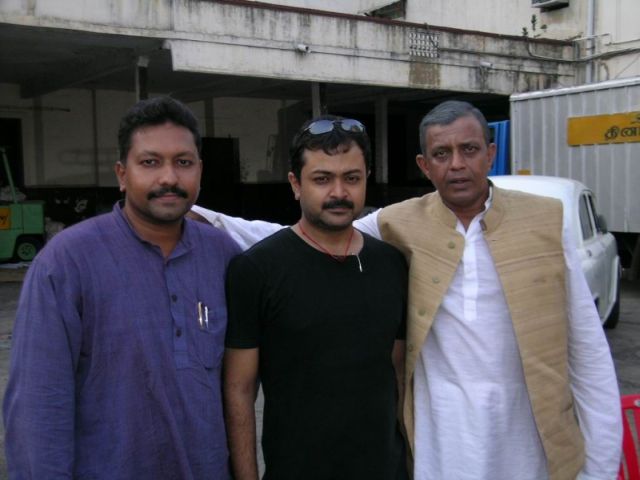
When Mani Ratnam Said: "You Son of a Bitch"


Perhaps it is the ‘uniform’ which Mani Ratnam’s crew wears: T-shirt, bermudas and sneakers. Mani himself wore it, so did his cinematographer Rajeev Menon and a bunch of young assistants. Together, they looked like men from another planet. The sight of the bermuda-clad men greeted me as I sauntered into office this afternoon. They were in the press to shoot for Guru, Mani’s latest project. I had gone on a binge on Sunday, so much so that I had dinner only at 5, as in 5 am this morning. To watch a shooting was the last thing on my mind: all I wanted to do was swallow a dispirin and go to sleep. But then I thought: why not?

I stood at the door of the press and watched, feeling unsteady and unwell. But as I observed Mani, I began to feel better. The man, I am told, has had his share of heart attacks, but he was bouncing around, as if he was wearing springs inside his FILA socks. And his eyes always twinkled, as if he was a 10-year-old. As I surveyed him surveying the press, someone touched my shoulder and said, “Excuse me.” I stepped aside and let the male voice walk in. It was Madhavan. He was wearing a vest and an assistant was presently handing him a shirt. Then another tall man in a white kurta and dhoti, with his short hair painted in silver, arrived: Mithun Chakraborty. The same Mithunda who disco-danced into people’s hearts two and a half decades ago wearing white – not dhoti-kurta but shirt and bell-bottoms and even white shoes. But the hair was black and long.

As soon as Mithun entered the press his assistant handed him a khadi waistcoat. They were ready for the shot. Mithun is a media baron and Madhavan is his son-in-law as well as his reporter. The scene is that of a confrontation between the two where Mithun basically asks Madhavan to get lost.

Ever since I moved to Chennai five years ago, I have seen quite a few film shootings and quite a few Tamil stars: Ajit Kumar, Vikram, Vijay, Sharath Kumar, Ramya, Rambha, Jyothika and a few others whose names I do not know. But they were all action or songs sequences. This was the first time I was witnessing the shooting of an intense dialogue scene. And it taught me two things: 1. You can’t beat experience, and 2. Perfection can be a pain but it is worth it.

When I say experience, I mean Mithun Chakraborty. The confrontation scene was okayed after about half-a-dozen retakes, and Mithunda breezed through each of them. After each time Mani would shout “Cut!”, the former Disco Dancer would stand in front of a pedestal fan and relax. An assistant would give him a piece of cloth and he would dab his face.

But Madhavan had no such respite. Mani, after shouting “Cut!” each time, would walk up to him and ask him to put more emotion in his dialogue-delivery. Not that what Madhavan was doing was anything wrong, but Mani wanted perfection. He would make Madhavan rehearse his lines like a schoolboy after every take. But not once did the director have any communication with Mithun Chakraborty. Mithunda, after all, is no ordinary actor. The masses might know him as the Disco Dancer, but few know that he has won the National Award thrice, including for his debut film – Mrinal Sen’s Mrigyaa. And he hopes to get the fourth for Buddhadeb Dasgupta’s Kaalpurush.

Coming back to Mani Ratnam’s perfection. Perfectionists can have a bad temper and today I witnessed Mani’s. Before every shot, his bermuda-clad assistants would dart around putting the set in order, but it was on them Mani’s temper struck like a thunderbolt. Before one of the retakes of the confrontation scene, a 20-something assistant went around clearing the place. But in the process, he himself lingered on in front of the camera for long enough to arouse the temper of Mani, who had already announced “Ready!” Mani went charging at the boy with a raised palm, as if about to slap him, and said, “You, you son of a bitch! You are spoiling everything.” The boy’s face remained emotionless: he was clearly used to such abuses. After the shot was taken he gently told the boy that he should run out – and not stroll out – of the camera’s view after getting a shot ready. But the next moment he lost his cool with another bermuda-clad assistant who held the clap-board. “You fool, don’t you know how to do it?”

All this while, I had plenty of opportunity to talk to Mithunda but the place was confined and I could not be sure if I was interfering with Mani’s scheme of things. I did not want Mani to call me son of a bitch or something like that. So I went to my cabin and worked for a while.

A little later, while I was going out for tea, I saw another shot being readied, this time in the portico of my office. Technicians were setting up reflectors and lights and a few men were busy yanking off the backdoor of a Fiat that bore a number plate starting with M. Clearly, the movie dates back to a few decades. The door was being pulled out to enable Rajiv Menon to shove in his camera.

While the preparations were on, Mithunda sat on a plastic chair smoking a cigarette. A vivacious and gorgeous colleague, who had already met him before, introduced me. There is one thing I have in common with Mithunda: we are both Bengalis who have taken a liking for the South and are living there. While Mithunda has picked up Tamil, I haven’t. After five years in Chennai, I can only get the drift of a conversation when two Anglicised Tamilians speak to each other. With Mithunda I spoke in Bengali and English, and I could see he was genuinely happy meeting a fellow Bengali in the location.

We chatted for a long time, during which he even gave out the storyline of the film but asked me to keep it to myself, which I will. But I can’t resist saying that Guru is similar to Mani’s earlier film Iruvar, in the sense that it involves real people and real incidents. Mithunda is, to use the cliché, humility personified. “Madam, there is no easy money,” he told my vivacious colleague, “I have been up since 5.30 this morning, and tomorrow at 5 I leave for Kovalam (to shoot for the same movie).”

When Mithun says “no easy money”, he means professionalism, which directors like Buddhadeb Dasgupta and Mani Ratnam recognise. The chat I had with him was really interesting: he even spoke about the Big B and not really in glowing terms. But you will have to wait for the interview – provided Mithun Chakraborty interests you. But take my word: he is an interesting guy.

Above is a picture where I am seen posing with him. I am sharing it with you, but I really feel ashamed. In the picture I look – to use my boss’ favourite expression – “decadent.” On my right is my colleague, M T Saju.

Friday, June 16, 2006

Bengalis

Bengalis love to eat. Wait a second, they live to eat. While the rest of the world feeds itself to survive the day, the Bengalis survive so that they can reward themselves with food at least three times a day. Without fish, they are like fish out of water: so a great deal of time, energy and money is spent on procuring the fish every morning.

Getting the fish is a task that cannot be trusted on the servants, so often it is the master of the house who goes about scanning the fish market soon after having his morning tea. Over tea, he quickly feeds his brain from the pages of Statesman, Telegraph, Ananda Bazaar Patrika or Bartaman. No self-respecting Bengali, after all, likes to be caught unawares about what's happening in the world (not just his city).

There are two kinds of Bengalis -- the British Bengali and the Bengali Bengali. The British Bengali speaks with an accent that makes you wish you should have been to Oxford. The Bengali Bengali is the one who speaks with an accent that is best illustrated by the following joke:

Britisher to Bengali: We fucked your motherland for 100 years!

Bengali: And uee weel phaak eur mathar taang phor ebhaar!

With both the varieties, you have to be 'mentally prepared' while entering into a conversation. For example, you should know which country won the football World Cup in 1986, or when was the petrol price hiked the last time. Anyway, the fish market is one place which levels the class difference between the British Bengali and the Bengali Bengali.

I could not have written all this if I was a Bengali bred in Calcutta. But I was brought up, in Uttar Pradesh, on the staple North Indian diet of daal-chaawal-roti-sabzi, with mutton or a river fish called rohu (rui in Bengali) occasionally thrown in. But marriage to a proper Calcutta girl has given me the ringside view of Bengali food habits.

What they consider a delicacy is a torture for me: stuff like prawn or varieties of fish such as the famous hilsa or pomfret or bhetki. "What do you mean you don't eat hilsa? Because of you I personally went to the market to get the fish," the husband of my wife's friend rebuked me. He was clearly more offended about a Bengali not eating hilsa rather than his effort going waste.

I have now got used to such rebukes after my recent trips to Calcutta. There is little I can do except watch others systematically devour the full Bengali meal: the rice first with vegetables, then with lentils and fried potatoes, then with fish and/or prawns, then with mutton or chicken. Finally comes the chutney, which is meant to be savoured individually rather than serve as an accompaniment, and then the dessert in the form of mishti doi or sweet curd. And even before the digestive juices could start working, the salivatory glands are already at work in the anticipiation of the next meal.

I love Bengali food -- minus the fish. What's risky for a highly fussy non-vegetarian like me is that bits of fish find their way even into the vegetables or lentils. A hardcore Bengali would like, for example, the daal to be cooked with the fish's head. My favourite is luchi and kosha maangsho -- pooris and mutton with thick gravy.

Before making my latest trip to Calcutta earlier this month, I happened to read a report about Satyajit Ray's death anniversary. A newspaper report said that the late director's family had invited select guests for the occasion and they were treated to luchi and kosha mangsho -- his favourite food. Secretly, I salivated for it. But alas, for the average Bengali, the combo is commonplace, and the focus is mainly on the varieties of fish when it comes to treating guests. Needless to say, I returned to Chennai after eating several meals of rice and daal and vegetables. It never occurred to any of my hosts to cook luchi and kosha maangsho.

Back in Chennai, I told my wife: "I really liked the luchi and kosha maangsho at your wedding."

"At my wedding?" she asked, smiling.

What to do! I keep forgetting I am a married man. I wish I could turn the clock back-- if not to my bachelor days, at least to the evening of our wedding, when the combo was on the menu and I barely had the time and energy to linger over the food.

Wednesday, June 14, 2006

Idlis

Some write 'idli' and some 'idly', but the image the phonetic sound throws up is the same: soft, steaming nearly-flattened white balls giving off an earthy and hunger-inducing smell. I am talking as an honorary South Indian who loves idlis, but I am sure there are people -- South Indians included -- whose taste buds don't get stirred by the sight or the smell of the idli. I can only feel sorry for them; but then, one can't be judgmental when it comes to food habits: a Korean can pity me for missing out on dog meat or cockroach pakora.

I can proudly say that I love idlis more than the South Indians do. For the South Indian, idli is a matter of habit, and habits are often without emotion. For example, brushing your teeth every morning is a part of habit, but you never look forward to brushing your teeth. But I have always looked forward to idlis, ever since my long childhood in Kanpur.

On a Friday evening every two or three months, my mother would soak rice and urad dal. The next afternoon, my father, after his half-day at work, would take the mix to a local grinder. Impatience began soon after he returned with the batter. Mother insisted that the idlis would not come out nice if the batter was not left overnight to ferment, so we waited for the morning of Sunday -- a holiday, the day of morning serials, the day of the evening movie on TV. It used to be idli breakfast, idli lunch and idli dinner.

The first 16 idlis (that's what a regular pot can hold) I would devour without any accompaniment, for the sambhar would still be cooking and I would have no patience. Once the sambhar was cooked, 16 more. And if any batter was left, then 16 more for dinner. I was so selfish about idlis that I didn't quite care how many others in the family -- mother, father and younger brother -- ate. My hunger would be even more aroused by the spluttering of mustard seeds and freshly-plucked curry leaves in oil.

Then one day I left Kanpur and went to Delhi, the land of tandoori roti and daal makhni. But still, my lunch would often be idli and sambhar, at a restaurant called Sona Rupa on Janpath. That was the safest food to have, even though the price was steep: Rs 25 or Rs 30 for a couple of idlis. (Irony: Sona Rupa shut down a few years ago, and it has been replaced by Saravana Bhawan where, I am sure, idlis come for much less). Eventually I found a very decent South Indian stall near Jantar Mantar off Parliament street. A plate of idlis for Rs 10.

And then one day I migrated to the land of idlis: Madras. The first few days I went berserk. Every time I saw I saw steaming idlis, clad in a white cloth, being offloaded from aluminium pots in roadside stalls, I stopped and had at least two. As long as the idlis were hot, you didn't care about the quality or, at least, the quality of the sambhar. Wisdom dawned only months later when I began to distinguish between good idlis and bad idlis.

Today, a highly popular chain of idli shop in Tamil Nadu, Murugan Idli Shop, has opened outlets in Madras. Both the outlets are a stone's throw from my T. Nagar home. I went there once, twice, thrice... but no more. Murugan Idlis' idlis are soft no doubt, but soft in a very leathery way. And the service can be pretty bad. Sad to see so many people -- including quite a few tasteful people I know -- pining for their idlis.

My favourite is the Triplicane-based Ratna Cafe, which has, fortunately, opened more outlets in the city. Their idlis are soft too, but in a very grainy way -- just the kind my mother made back in Kanpur years ago. And the boys there keep pouring sambhar from aluminium mugs the moment they sense the idlis are getting dry. And the sambhar they make is the best in the world. That's the idli and the sambhar Ratna Cafe has been making since the 1940's. I can spend a lifetime watching their sambhar getting soaked by the porous idlis: eating them all would require another lifetime.

Friday, June 09, 2006

Old India, New Indian

The man on the upper bunk snored away as I sat by the window, watching the world-famous greenery of Kerala pass by. Every time the train stopped, he would lower his head and ask me ‘‘Which station?’’ and go back to sleep. Finally, during a longish halt, he climbed down. He smiled at me and asked: ‘‘Where you going?’’ ‘‘Trivandrum,’’ I replied. ‘‘I also going to Trivandrum. My friends booking a resort in Kovalam. We will have some enjoyment.’’ In India, a train journey is rarely complete without fellow passengers exchanging bio-datas. Within minutes, I had his: His name was Velu, he was 29, and he worked as a leather technician in Guangzhou, China. He had a wife and a four-year-old daughter who lived back home in Chennai. He was on vacation, and he was on his way Kovalam beach for ‘‘enjoyment.’’ Read more

The Eye of Time: Book Review

Time is like a fistful of sand. You can rarely completely own it: the grains are bound to slip out of your fingers and become what we call history. But here is a chance to do just that, own history. Buy Camera Chronicles of Homai Vyarawalla. Vyarawalla needed no introduction to the high and the mighty in the 1940s and 1950s, but for the benefit of the present generation, here goes. Read more

Who Are You Banning?

In journalism we follow one principle when we are not certain about a fact or facts while writing or editing a copy: When in doubt, leave it out. Suppose we are not sure whether Tamil Nadu chief minister M Karunanidhi is 82 or 83, and if there is no reliable source at hand to verify his age instantly, we leave it out. Read more

Tuesday, May 30, 2006

It's happening in Tamil Nadu

That's the strangest thing about Tamil Nadu: its politics. For full five years, posters of Jayalalithaa were plastered on walls all over the city. Overnight, they have been replaced by those of a smiling Karunanidhi. It is a 'laughing' Karunanidhi actually: he never smiles in the posters, but laughs -- as if someone has just cracked a joke. Jaya, on the other hand, is always sombre.

The laughing Karunanidhi is going to preside over Tamil Nadu's -- at least Chennai's -- roads for the next five years. But having witnessed the elections in the state for the second time in a row, a few questions spring up to my mind:

1. Why does Tamil Nadu never have a hung Assembly-type of situation? Why does the winning party usually sweep elections in spite of the absence of any apparent wave?

2. Why do the AIADMK and the DMK behave as sworn enemies instead of political opponents? Even the leaders of the BJP and the Congress, or even the Left, are cordial at the personal level? And if Vaiko can join hands with Jaya after being sent to jail by her, why is there no hope of Kanunanidhi and Jayalalithaa ever being at least civil to each other?

3. Why do people commit suicide whenever their political hero or cine hero (often the same in case of Tamil Nadu) loses elections or passes away?

But one good thing about parties getting sweeping majority is that there is governance in the state -- different matter that you may or may not like the style of governance. In other states, governance usually takes the backseat because those in government are preoccupied with their survival in power. The fact that Uttar Pradesh has gone to the dogs is because the state has been having a hung Assembly for years now. That is why Tamil Nadu is no longer seen as a place where "Madrasis" live and where people eat only idli and dosa. Tamil Nadu is happening.

Reflections

No, you haven't strayed into someone else's blog. The new title is inspired by an article I wrote two years ago: an account of my visit to Haridwar. We are all on a journey: at times it feels like being on a boat in a river; at times we speed like a train; and at times time just flies like a plane. To savour the varied paces of life instead of getting carried away by the pace itself, one needs to sit back from time to time and reflect. Reflection leads to writing, and writing to salvation.

On the Ganga Mail

The Ganga is like a train. It starts from a station called Gangotri, up in the Himalayas, and, after chugging through the plains of North India, terminates at the mouth of Bay of Bengal. Everyday, millions board the train at various stations, hoping to get to a place called Salvation. Nobody has ever seen the place; they’ve only heard about it. Yet, they undertake the tedious journey.


The notable difference between the Ganga and the regular train is that the Ganga doesn’t have any classes — no second class, first class, 2AC or 3AC. It has only one class — faith. And the notable similarity is — well, to find that you’ll have to take the Ganga Mail. It’s like taking, say, the Kalka Mail from Delhi to Kolkata. When you board the train, you find your compartment tidy, the toilets clean enough and there are no ‘unreserved’ passengers squeezing you in your own seat. But as soon as the train rolls into the plains of Uttar Pradesh and then into Bihar, the journey threatens to become a nightmare. You should be grateful to God if you reach Kolkata in one piece. But when dacoits strike in trains in Bihar, even Gods seem to look the other way.


The same is the case with the Ganga. The further it flows, the more corrupted it gets. So while at one place it looks spectacular, at another it looks — rather is made to look — ugly. Here’s a look at two such places: one inspiring awe, another evoking anger. And even while you read this, Ganga’s eternal journey continues.


The April sun shone brightly the morning I walked out of the Haridwar station, all set to take the Ganga Mail. But it wasn’t hot: a cool breeze was wafting down the Himalayas which overlook this holy town. It was the wrong — or perhaps the right — time to be there. The Ardha Kumbha Mela was on and Haridwar was a sea of people. They were trooping in from everywhere, with the sole purpose of bathing in the river on that auspicious day and be blessed.


Traffic was restricted because of the mela and I walked more than a kilometre before I found a cyclerickshaw to take me to a hotel. Which hotel, I had no idea. I left the choice to the wisdom of the rickshawpuller. I was glad I did that. The hotel was not only good but it also gave me a discount that journalists in North India either extract or are entitled to, officially or unofficially.


After a shower I decided that I needed a drink, for the simple reason that Haridwar is a dry place; and dry places and dry days make you more thirsty. So I pulled out the hip flask from the rucksack along with a guide book on Uttaranchal.


All these years, Uttar Pradesh boasted of Haridwar and Gangotri but today these places belong to Uttaranchal. Uttar Pradesh is left with the part of Ganga which feeds millions, which has sustained many cultures, which has inspired hundreds of folksongs and Bollywood songs, but which you would not like to go to as a tourist. Unless you are one of those hardened travellers who draws a beautiful picture even in an ugly setting.


In Haridwar, the Ganga is not just a holy river. It’s an event. It’s like watching a movie. Every swirl of it has to be watched to understand the whole story. And this is one movie for which you always reach late: even before you see the river you hear its gurgling sound, and by the time you take your seat by its banks, there is already a crowd of a thousand people watching the show.


I also arrived late after strolling through the narrow streets around Har Ki Pauri, the main bathing ghat. The streets are lined with shops that sell everything required by an average, God-fearing Hindu family. And most music shops seemed to play the same song, all the time, Maano to main Ganga maa hoon, na maano to behta paani — If you are a believer, I am Mother Ganga, and if you are a non-believer, I am just flowing water. Either way, the river, fresh out of the Himalayas, is spectacular here and now I was going to witness the spectacle. I deposited my sandals (no footwear allowed) and walked into Har Ki Pauri. It has steps constructed on either side of the swiftly flowing river and a couple of temples jut into the water. Iron chains run along the embankment — in case the current is too strong for you.


Thousands were frolicking in the chilly water. To me they looked more like one huge family out on picnic. While they took the dips, making joyous cries, hundreds of others were busy changing for the bath, unmindful of the onlookers. And there were hundreds more towelling themselves and changing into fresh set of clothes, unmindful of others. A strange paradox struck me. Indian women are a modest lot. They would not imagine wearing bikinis at the beach. They would rather labour under the weight of a wet saree. But here, they change as if they were in the privacy of their bathrooms: the shame is yours if you run into them. Perhaps the holy atmosphere is expected to act as a curtain.


Finally, the sun went down and it was time for aarti (waving of lights). Loudspeakers urged bathers to clear out and take their place on the steps. Religion enforces discipline more effectively than anything else, and soon a mass of humanity was seated on each side of the river — in total silence. Many people stood on the banks, holding leaf-bowls that contained flowers and an oil-lamp. The lamp was to be lit and the bowl released in the water.


At the appointed time, the bhajan, Jai Gangey Mata began playing on the speakers. Bells in the temples rang and priests came out with huge brass lamps, waving them at the swirling black waters, now illuminated by the hundreds of tiny, floating diyas. Har Ki Pauri resembled a stadium witnessing the closing ceremony of an Olympic Games — only that this stadium was linear, not oval.


Faith, they say, moves mountains. And when the collective faith of thousands of people is at work, something is bound to happen. Well, the Himalayas stood still. But the Ganga, with all those floating lamps, suddenly began to look like a bejewelled goddess. One of those lamps was lit by me.


Those pirates struck in the high seas, these pirates strike in the river, rather the confluence of the two great rivers of India which makes Allahabad famous. They glide their boats alongside yours and even before you realise, you've been persuaded into performing an expensive, boat-to-boat puja for the well-being of your near and dear ones.


Since all this happens in the middle of the river, you can't even walk out. All you can do is console yourself watching other would-be victims getting rowed into the trap of the priests and the pandas — as the middlemen between God and mortals are called — who throng the river.
I saw it coming even when I was long way off from Sangam (that’s what the confluence is called). It was 7.00 am but the sun was already merciless and I didn’t know who to feel more sorry for — myself or the rickshawpuller who was carting me to the riverbank. Sangam must have been still a kilometre or two away when a man on a bicycle pulled alongside.


“Sir, I am boatman. You want boatman,” he asked in English. He looked too healthy for a boatman. I told him that I was a local guy, and that I did not need him or his boat. He was undeterred. He kept pace with my rickshaw and soon reopened the conversation:


“So you are from Kanpur. We used to make our boats there. It took three days to row down to Allahabad.” I merely nodded, hoping that my silence would shut him up and send him way. But this man had smelt a prey.


“Sir, you are one of our own. I will show around like no one else will do. I will show you the exact spot where the Ganga meets the Yamuna,” he pleaded. I knew I was trapped. I will spare you the details about what happened from then on till the time I sat in the boat. But he had still not said how much he was going to charge. “You are our guest, sir. Money is not at all a problem,” he kept saying.


Only after he had untied the rope and stepped into the boat, followed by an emaciated old man, he said: “Give me Rs 400.” As I had suspected, this man looked too healthy to be rowing a boat. He was just a pimp. The old man rowed the boat.


From the boat I could clearly see the green waters of the Yamuna meeting the muddy waters of the Ganga before the two, together, head eastwards towards Varanasi. A few metres away from the confluence is a spot where water is only two feet deep and which is surrounded by dozens of pilgrim-laden boats. That's where people bathe and wash away their sins and immerse the ashes of the dead.


Before I could reach there, the pandas attacked. A boat came up from nowhere, and in a flash I found myself holding three shrivelled coconuts. I was also giving out my father’s name, my mother’s name, my gotra and was soon repeating mantras that the pirate was chanting. Reality struck me only when he asked for the money: Rs 501. Once again I’ll spare you how I extricated myself, but not before shelling out Rs 100 (saving of Rs 401!).


“This is nothing. They extract thousands of rupees from people who come for pind-daan (a ritual for the soul of dead relatives),” the pimp on my boat said with a grin.


If the pandas make their living from the departure of souls, there are people who make a living —and occasionally a fortune — from the ashes. They are the gotakhors, or divers.


I saw a man, his head freshly shaven, leaning from a boat and emptying an urn into the river. Suddenly two gotakhors swooped in on their boats and plunged iron sieves into the spot where the shaven-headed man had just finished emptying the urn. They were looking for ornaments of the deceased but all they could net was tiny, sparkling pieces of bone. Salvation, even for the dead, does not come without the humiliation of their bones being sifted for gold.


A sense of disgust overcame me. I wanted to return to Haridwar. But then I remembered that the Ganga is a Down train: it does not make a return journey.

Thursday, May 25, 2006

Thought Processor At Work

Thought processes can be alike. But I never realised there would be three 'Thought Process' in blogspotdom, yours truly included. Curiously, the other two turned out to be Indians as well. Seeing their pages, I for a moment thought someone has played mischief with my font and colour. (I guess they will feel the same if they chanced upon my blog). After I got over the surprise, I felt as if... well, it felt like this: you pass by a Lee showroom and fall in love with a shirt and buy it; and the next day you find someone else wearing it as well!
Moral of the story: I need to come up with a new one. The thought process would be the same, but the signboard newly-painted, with a new title. Till then...

Monday, May 22, 2006

Pens

All dressed but nowhere to go: that's the situaton I find myself in very often these days, especially since I bought the laptop over a year ago. A fairly decent collection of fountain pens, a few bottles of ink (black, blue, blue-black and green) and several handful of ink cartridges (Reynolds, Cross and Waterman). But nothing to write.

The nature of my job in Chennai gives me ample time, unlike my Delhi days when you had to rush out to the spot, rush back to office and type out your story, and then rush out again. Even since I came here five and half years ago, till I acquired the laptop, I used to handwrite every story before typing it out in the office. The handwriting would be careful in the beginning, with the opening paras being written and rewritten several times. The style would have to match the ideas: that's when the alcohol was yet to have its effect. With the first kick of the booze, the thought process would get uninhibited and I would start taking liberties with the style: the handwriting would not matter much. After the third drink, the style or the handwriting would not matter at all -- only ideas. They kept coming, I kept jotting. The next morning, I would rewrite most of the stuff while typing on the computer and turn out a rather decent story. No longer. Today I go more by the appearance of a sentence on the screen.

Pablo Neruda once said that writing needs to be done with minimum tools at your disposal. Just a pen and a piece of paper would do. One cannot agree more. When all you have is a pen and a piece of paper, your mind works the most. When you type on, say, Microsoft Word, distractions are plenty -- from the spellchecker to the word counter. You get so caught in technology that you forget to push your mind hard. A stray thought, which could have been immensely useful, risks being blocked like a pop-up just because you are so focussed on the screen.

Back to pens. Fountains pen have always fascinated me. Nothing like the ink flowing smoothly through a thick nib. As a child I mainly used a pen called Usha. It had a transparent body, which kept showing you how much ink is left. It cost, if I remember correctly, Rs 2 or Rs 3. Occasionally, I would be treated to a Camlin, or the Chinese-made Hero. I wrote my class 12 exams with a fountain pen whose brand I can't even recall: it was local-made and must have cost not more than Rs 10 at the time.

By then Reynolds had come, and so did pens with jotter refills. I don't remember when exactly and why I switched loyalties, but for a long period starting from college I used ball pens. Maybe at that point other things mattered more than pens. Then, in 1991, we went to attend my uncle's wedding in Bengal. I carried a camera and took pictures. And elderly relative, who we had never met before, wanted some of the pictures to be sent to him. To write down his address, he took out a fountain pen: a cheap one, but well taken care of. The way the ink flowed made me salivate -- yes, salivate. I returned to my first love.

There are two things I don't like about ball pens. One, the ink-flow becomes uneven after a point. Two, it leaves an obnoxious impression on the back of the page. Roller-balls are fine, but then, you can't beat the bottled ink.

While working in Delhi, the first expensive fountain pen I bought was a Flair President. It had cost me Rs 450 in 1995 (Parker hadn't come yet). That was the best pen I ever possessed: I wrote countless letters and articles with that. (It is still lying somewhere in my cupboard, broken). Then I started buying Parkers. By now I realised that I was not the only one with a passion for fountain pens, and that a good fountain pen was also a statement of style. M.J. Akbar, one of my editors in Delhi, always carried a Mont Blanc in his pocket -- the white star on the cap signifying the superior status of the owner. Whenever he was travelling, he would write out his column, Byline, in longhand and fax it to the office: flawless pieces with no words or sentences struck out.

Mont Blanc, at that point, was out of reach for me: Rs 10,000 in 1996 or 1997. But I kept buying other stuff. I got pens as gifts too, from the dearest ones. Today, my collection is fairly decent: several Parkers, two Hertig, one Lamy, one Cross, two Waterman, one Camlin (for Rs 50, bought in Trivandrum), one Pierre Cardin, and now, one Mont Blanc (a wedding gift by my wife). Another Mont Blanc is on the way, thanks to a very special friend. Isn't life wonderful?

All I need to do now is justify the possession of so many pens by switching off the computer and grabbing a piece of paper. Neruda was right, after all.

Sunday, May 21, 2006

What's Your Caste?

A couple of years ago, a friend had thrown a small party at his flat in Chennai, where I met a very attractive girl from Kerala. As luck would have it, I found myself alone in her company quite a few times during the evening. Since I had been to the state quite a few times, I sought to impress her with whatever little knowledge I had then about God's Own Country. Luck seemed to be going in my favour till I made a terrible faux pas. I happened to ask her, “Are you a Nair or a Nambiar or a…?” She cut me short, penetrating my eyes with hers, “In this day and age, how can you ask someone's caste?!” I wished I could bury myself in the concrete floor. Read more

Friday, May 12, 2006

Sex

And I thought those good days had ended with marriage. But marriage, I am realising, endows you with certain respectability and trustworthiness which give you access to more and more women -- wife's friends, wife's colleagues, wife's relatives and so on. These are women who consider you by and large harmless and therefore don't mind letting their guard down in your presence.

So there I was, sitting with my new wife and two of her friends -- both married for a few years and both to busy IT guys. The subject of sex came up, though I don't remember how.

"Sex!" one of the friends exclaimed, "Sex is now like (Durga) Puja, it comes only once a year."

"Exactly," the other friend giggled.

I was listening.

Thursday, April 13, 2006

DIC(K)

Guys, look at the headline of this report appearing in a self-proclaimed national newspaper and decide whether the sub-editor in question is just being cheeky or is plain ignorant or is simply the kind who plays it safe by condensing the intro into a headline. Or is it just my mind which is being dirty? If that's the case, I am not to be blamed alone, for a friend passed this on to me. And that friend had it passed on by a friend of his.

If anyone is to blame, it is former Congress stalwart in Kerala, K Karunakaran. Couldn't he have thought of a better name for his breakaway party which didn't abbreviate as DIC(K) -- Democratic Indira Congress (Karunakaran)? As a sub-editor, I would find the bracketted 'K' to be highly suggestive and would avoid using the acronym in the headline. But Karunakaran is no sub-editor: he doesn't care what his party looks like or sounds like as long as he is able to thumb his nose at the Congress. Well, the DIC(K) thumbed its nose, and in retaliation the Congress hardened its stand. Now one doesn't expect DIC(K) to turn soft because of the Congress' hardened stand: that would take the fun out of Kerala's politics in the run up to the Assembly elections.

I wonder if Karunakaran and his son Muraleedharan are aware of the jokes (cracked and, perhaps invented, by Malayalam journalists working out of Delhi) that are rampant about their DIC(K): no, the jokes were invented long before they invented the new party.

Monday, April 10, 2006

To Write Or Not To Write

Hi guys! The fact that you are reading this shows you haven't forgotten me -- and that's very reassuring. Keep coming back, for I haven't finished yet. In fact, this is just the beginning. What has finished is one phase of my life -- the only phase that I have known since childhood, the phase which I kept clinging to for so long that I feared being left out, the phase which made me feel independent at times and insecure at others, the phase in which I lived life kingsize. Bachelorhood.

Life, for me, would be a joint account from now. But wait, that is not going to shorten the space for my own signature: it will still be in bold and in full. No dilution there. So you can expect more of sex, scotch and Pancham. By the way, here's something I discovered for hardcore Kishore Kumar fans: http://songs.kishorekumar.org/. Check it out, it will make your day.

Of late, I have been listening to plenty of Pancham as well. My current favourite is Manna Dey's Deewaron ka jungle jiska aabadi hai naam, andar se chup chup lagta hai baahar hai kohraam (from Deewar). I realised RD has set another song to the same tune, sung very emotionally by Kishore: Hum aur tum thhey saathi, abhi hai kal ki baat; aaj safar mein tumne kyon chhod diya mera saath -- we were partners till yesterday, why have you suddenly left me today? -- from the movie Hamare Tumhare.

Given the transition in life I am going through, I try not listening to the second version: it drives a knife into my chest. A successful relationship is always built on the graveyard of failed ones, and it is particularly painful when you consider yourself as the culprit for the failure. If I had my way, I would kneel and place my head on the ground and weep till the tears had drained me of every drop of guilt. But should I accept responsibility for a crime that has been committed by Mr Circumstances?

Mr Circumstances is the son of a bitch. But then there is also Ms Circumstances, the angel, who helps you ignore him and move on. I met the angel in Rishikesh, and she changed my life. No, no, the angel isn't the one I am going to marry. This angel was the real angel: the kind you read about in fairy tales. One touch by her and my whole Thought Process changed. In fact, in Rishikesh, I had even forgotten the fact that I had a blog, leave alone its title.

As I write this, Manna Dey's Deewaron ka jungle is playing for the 20th -- or 30th -- time on my speakers, and for some reason, I don't feel like stopping either him or my writing. Manna Dey has a kind voice, and I need that kindness now -- especially the kindness which drips in the Deewar song. Really, don't we all live in a deewaron ka jungle -- a jungle of concrete walls -- where we are left to fend for ourselves? We might have parents, siblings, a husband, or a wife -- but at the end of the day, you are alone and you have to hunt for your own happiness. It is only when you are a child that one of your parent will hunt for happiness and will bring it you; otherwise you will have to hunt for it yourself.

I hunted for my happiness; and it eventually came my way. But unlike lions and tigers, humans have emotions. As a human, you can't savour the happiness without thinking of the would-have-been happiness or could-have-been happiness. And would-have-been-happiness = memories. And memories I have in plenty: where is the space to bury them?

The intelligent thing is to reason the memories and not bury them; memories are something that make you wise. Memories are because you move on. And I am moving into future holding the hand of Pancham: Raat banoon main aur chaand bane tu. I broke my back looking for the song, but I only had to bat my eyelid to find someone to share the song with, share my life with. That's life: one moment it is elusive, at another it pampers you.

Amid all the pampering, I might have forgotten to write my blog, but I did not forget to take a look at, or think about, what I have written so far. My posts so far are nothing but outpourings of a hungry soul -- a soul hungry for attention and a little bit of love and care. Whose attention? Whose love? Whose care? I do not know. I don't even know why I wrote them -- whether to really seek attention or just for some effect and fun. But the fact is that I wrote them and I am not going to shy away from the responsibility. And since I love to write, I will keep on writing, love or no love. All I would need is the hunger to write.

Monday, March 20, 2006

By The Ganges

First of all, my apologies for the unexplained absence -- month-long, as I realise now. One month: four weeks. The first week was the most anxious in my life so far; the second most blissful; the third week contained residues of the bliss and hence the most peaceful; the fourth was spent in numbness induced by pleasant suprises that life is capable of throwing up at the most unexpected moments.
 
A month ago, I might have described in detail what I went through in each of these weeks. But now I will stick to the second week, the blissful one, for that alone is relevant here and worth sharing. That was the week I spent at the feet of the mighty Himalayas, in Rishikesh, when there was hardly a moment when the swiftly-flowing Ganges was out of sight. At times the river was green, at times grey, at times black with shimmering electric lights reflecting on it. A narrow street. On it cyber cafes and samosa shops; sadhus and beggars; the Oriental and Western; stray cows and dogs; flies and cowdung and incense sticks; Indian restaurants and an Italian restaurant; love and no hatred; love-making but no sex; chatter and chants; mortals and the Gods.
 
The seven days I spent there, participating in an international yoga festival, melted away faster than the Ganges. But not before I learned a few things, which I would like to share with you guys:

1. The simplest things in life are the most difficult to achieve. Just like the simplest of asanas, or yoga postures. The trikonasana or the triangle pose, for example, might seem to be child's play, but you could spend a lifetime perfecting it. The trick is to keep trying.

2. Never push anything -- be it your body, your relationships, your capabilities or whatever -- beyond 70 percent of its limit. Leave that 30 percent of space for imperfection. Things work the best that way.

3. When you fall or lose balance while doing an asana, the only option is to get up and get back to the pose. The same thing applies to life.

4. A beautiful smile is the offshoot of a beautiful mind. Don't trust the dentist or the toothpaste ads.

5. If you think you are the best, you are mistaken. There are people who are 'bestest'.

6. Have faith. Real faith. Doesn't matter if you don't believe in God.

7. Do yoga. It moves your butt like nothing else, even though yoga might seem something where you only lie on your butt and do nothing else.

8. Visit the mountains once a year.

9. Visit the Ganga, or the Ganges, once a year. Life is incomplete if you haven't been by the Ganges.
 
10. Sabse oonchi prem sagaayi -- the union of love is the greatest union.